


| Hank Williams |
 “My Son Calls Another Man Daddy” “My Son Calls Another Man Daddy” |
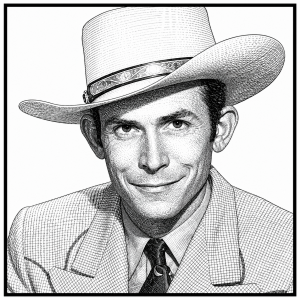 Hank Williams was one of the most influential and legendary figures in the history of country music, celebrated for his emotionally powerful songwriting, haunting voice, and ability to capture heartbreak, loneliness, faith, and human struggle with remarkable honesty. Born Hiram King Williams on September 17, 1923, in Mount Olive, Alabama, he grew up in poverty during the Great Depression. Much of his childhood was shaped by hardship, family instability, and chronic health problems caused by a spinal condition that left him in pain throughout his life.
Williams developed a love for music at an early age, learning guitar from local musicians including African American street performer Rufus “Tee Tot” Payne, whose blues influence deeply affected his style. As a teenager, Williams performed on local radio stations and formed bands that played throughout Alabama and surrounding states. His natural charisma and emotionally direct singing quickly attracted audiences.
By the late 1940s, Williams had become one of country music’s brightest stars. After signing with MGM Records, he released a remarkable series of classic songs including “Your Cheatin’ Heart,” “I’m So Lonesome I Could Cry,” “Cold, Cold Heart,” “Hey Good Lookin’,” and “Lovesick Blues.” His songs combined simple language with profound emotional depth, helping define the modern country songwriting tradition.
Williams became a major star through appearances on the Grand Ole Opry and extensive touring across the United States. His performances reflected both confidence and vulnerability, qualities that audiences found deeply compelling. He also recorded gospel music under the name Luke the Drifter, revealing the spiritual side of his artistry and his lifelong struggle between faith and personal demons.
Despite extraordinary success, Williams battled alcoholism, prescription drug dependence, and severe physical pain. His erratic behavior increasingly affected his personal life and professional career. Though still enormously popular, he was dismissed from the Grand Ole Opry in 1952 because of missed performances and unreliability caused by his addictions.
On January 1, 1953, while traveling to a concert in West Virginia, Hank Williams died in the back seat of a car at just twenty-nine years old. His death shocked the music world and transformed him into a lasting American legend.
Hank Williams’ influence on country music remains enormous. Artists ranging from Johnny Cash to George Jones and countless others have cited him as a defining inspiration. He remains one of the greatest songwriters and most enduring voices in American music history.