
| Patti Page |
 “I Don’t Care If Tomorrow Never Comes” “I Don’t Care If Tomorrow Never Comes” |
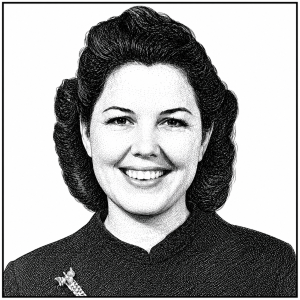 Molly O’Day was one of the most emotionally powerful and distinctive female voices in early country music, remembered for her deeply expressive singing and her influence on generations of traditional country performers. Born Lois LaVerne Williamson on July 9, 1923, near Pikeville, Kentucky, she grew up in the Appalachian mountains surrounded by the sounds of gospel music, folk ballads, and mountain singing traditions. Those musical roots shaped the heartfelt vocal style that later made her a respected figure in country music history.
As a teenager, O’Day began performing on local radio stations and quickly gained attention for her remarkable voice, which combined strength, sorrow, and emotional honesty. She eventually joined the Grand Ole Opry during the 1940s, a period when country music was expanding rapidly across the United States through radio broadcasts and live touring shows. Her performances stood out because of the raw emotional quality she brought to every song.
O’Day recorded for Columbia Records and became known for songs such as “I’ll Sail My Ship Alone,” “The Tramp on the Street,” and “Teardrops Falling in the Snow.” Her recordings often explored heartbreak, loneliness, faith, and personal struggle, themes that resonated strongly with working-class audiences. Unlike some singers of the era who favored polished vocal styles, O’Day embraced a more natural and emotionally direct approach that gave her music unusual intensity.
Many historians consider O’Day an important bridge between traditional Appalachian singing and later honky-tonk country music. Her influence could be heard in the emotional vocal delivery of later artists such as Loretta Lynn and Patsy Cline, both of whom admired singers capable of conveying genuine feeling through simple, direct performances.
In the early 1950s, O’Day experienced a religious awakening and gradually withdrew from secular country music to focus primarily on gospel singing. She spent much of the remainder of her life performing religious music and living quietly in Kentucky.
Although she never achieved the widespread commercial fame of some later country stars, O’Day became highly respected among musicians, collectors, and traditional country fans for the emotional authenticity of her work. Her recordings remain admired for their sincerity and haunting beauty.
Molly O’Day died on December 5, 1987, leaving behind a lasting legacy as one of country music’s most soulful and influential early female vocalists.