





| A.P. Carter |
 “Two Sweethearts” “Two Sweethearts” |
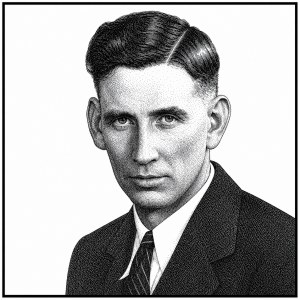 A.P. Carter was one of the founding figures of country music and a central member of the legendary Carter Family, whose recordings helped shape the sound and identity of traditional American country music. Born Alvin Pleasant Delaney Carter on December 15, 1891, in Poor Valley, Virginia, he grew up in the Appalachian Mountains surrounded by folk ballads, hymns, and mountain music passed down through generations. These musical traditions deeply influenced the work that later made him historically important.
Although A.P. Carter was not known for having a powerful singing voice or flashy instrumental ability, he possessed extraordinary talent as a song collector, organizer, and musical visionary. During the 1920s, he formed the Carter Family with his wife, Sara Carter, and his sister-in-law, Maybelle Carter. Together, the trio developed a sound that blended close harmony singing with Maybelle’s innovative guitar style and the emotional sincerity of Appalachian folk traditions.
The Carter Family gained national attention after traveling to Bristol, Tennessee, in 1927 to record for producer Ralph Peer during the famous Bristol Sessions, often called the “Big Bang of Country Music.” Their early recordings, including “Wildwood Flower,” “Keep on the Sunny Side,” and “Can the Circle Be Unbroken,” became foundational classics of country and folk music.
A.P. Carter’s greatest contribution involved traveling throughout the Appalachian region collecting old folk songs, gospel hymns, and traditional ballads. He adapted and organized many of these songs for the Carter Family’s recordings, helping preserve musical traditions that might otherwise have disappeared. His dedication to gathering and sharing rural Southern music gave the Carter Family a vast repertoire that deeply influenced later generations of country, bluegrass, folk, and gospel performers.
The Carter Family’s recordings emphasized faith, family, hardship, love, and perseverance, themes that became central to country music’s emotional identity. Through radio broadcasts, recordings, and live performances, A.P. Carter helped bring Appalachian music to a national audience during the early years of commercial recording.
Although the original Carter Family eventually separated professionally, A.P. Carter remained closely connected to music and rural community life throughout his later years.
A.P. Carter died on November 7, 1960, at the age of sixty-eight. He is remembered as one of country music’s founding architects and a vital preserver of America’s folk and mountain music traditions.