
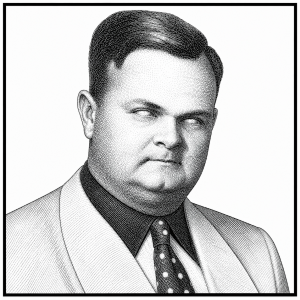
| A.C. “Eck” Robertson |
 “Done Gone” “Done Gone” |
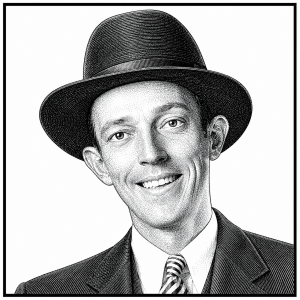
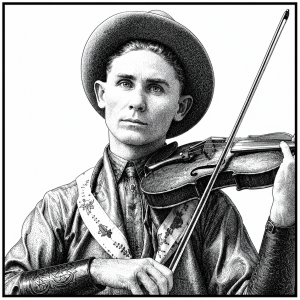 Eck Robertson was a pioneering old-time fiddler whose recordings are widely regarded as some of the earliest examples of commercial country music. Born Alexander Campbell Robertson on November 26, 1887, in Delaney, Arkansas, he was raised in Texas, where he became immersed in the rich traditions of Southern fiddle music, cowboy songs, and frontier dance culture. From childhood, Robertson demonstrated exceptional musical ability and quickly became known for his energetic fiddle playing and mastery of traditional tunes.
As a young man, Robertson traveled extensively throughout Texas and neighboring states, performing at dances, fiddle contests, and community gatherings. His style blended Appalachian fiddle traditions with the lively rhythms and improvisational flair common in Southwestern string music. He earned a strong regional reputation as both a gifted musician and a colorful entertainer.
Robertson made music history in 1922 when he traveled to New York City and recorded for Victor Records. Accompanied by fellow fiddler Henry Gilliland, he recorded tunes including “Sallie Gooden” and “Arkansas Traveler.” These recordings are often considered among the first commercially successful country music records and predated the better-known early recordings of artists such as Fiddlin’ John Carson. Robertson’s performances demonstrated that rural Southern fiddle music could attract paying audiences through the growing phonograph industry.
His recording of “Sallie Gooden” became especially admired for its technical skill, rhythmic energy, and vibrant improvisation. The record showcased the excitement of traditional fiddle music and helped preserve styles that had previously existed mainly through oral tradition and live performance.
Although Robertson never became a major national celebrity, his historical importance steadily grew over time as scholars and musicians recognized his role in the birth of recorded country music. His recordings influenced later generations of fiddlers and helped establish the commercial viability of old-time Southern music.
Unlike many later country performers who focused heavily on vocals and polished production, Robertson remained rooted in instrumental dance traditions and frontier-style fiddling. His music captured the raw energy and community spirit of rural American entertainment during the early twentieth century.
In later life, Robertson continued performing at fiddle contests and folk festivals, where he was celebrated as a living link to country music’s earliest days. He died on February 15, 1975, at the age of eighty-seven. Today, he is remembered as one of the foundational figures of recorded country music and one of America’s great old-time fiddlers.