





| Fiddlin’ John Carson |
 “The Little Old Log Cabin In The Lane” “The Little Old Log Cabin In The Lane” |
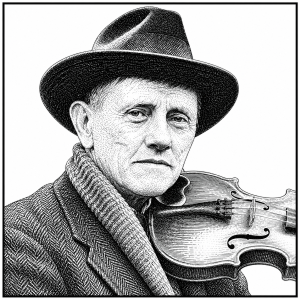 Fiddlin’ John Carson was one of the earliest recording stars of country music and a pioneering figure in the development of commercial rural American music. Born John Carson on March 23, 1868, near McCaysville, Georgia, he grew up in the Appalachian South surrounded by traditional folk music, fiddle tunes, ballads, and storytelling customs passed down through generations. His upbringing in rural Georgia deeply shaped the musical style that later made him famous.
Carson learned to play fiddle as a young boy and became known locally for his energetic performances at dances, political gatherings, and community events. In addition to music, he worked various jobs throughout his life, including as a textile mill worker and mechanic. Despite his ordinary working-class background, Carson possessed extraordinary musical charisma and a strong connection with rural Southern audiences.
By the early twentieth century, Carson had become a well-known regional entertainer through appearances at fiddle contests and traveling performances. His lively old-time fiddle playing and nasal singing style reflected authentic Appalachian traditions at a time when commercial popular music was dominated by urban orchestras and vaudeville performers.
In 1923, Carson made history when he recorded songs for Okeh Records in Atlanta, Georgia. Those recordings, including “The Little Old Log Cabin in the Lane,” became unexpectedly successful and are widely considered among the first commercially successful country music records. Initially, record executives doubted that rural Southern folk music would sell, but Carson’s recordings proved there was a large audience eager to hear music reflecting their own experiences and traditions.
Carson’s success helped launch the commercial country music industry and encouraged record companies to seek out other rural performers throughout the South. His recordings preserved a style of old-time music rooted in fiddle tunes, sentimental ballads, comic songs, and mountain storytelling. Though later country music evolved in many different directions, Carson’s recordings captured the raw spirit and simplicity of early Southern folk traditions.
Throughout the 1920s and early 1930s, Carson continued recording and performing widely, becoming one of the best-known old-time musicians of his era. His influence extended beyond music into the broader recognition of rural Southern culture in American entertainment.
Fiddlin’ John Carson died on December 11, 1949, but he remains remembered as one of country music’s founding recording artists. His early success demonstrated the commercial power of traditional Southern music and helped open the door for generations of country performers who followed.